Botanical Supplement Forms
Botanical materials can be prepared and presented in various forms, each with different characteristics regarding concentration, convenience, shelf stability, and bioavailability. Understanding these different formats provides context for modern wellness practices.
Whole Plant Material
In its most basic form, botanical material may be used whole—dried leaves, roots, berries, or other plant parts. This represents the closest form to traditional use, where practitioners would collect plants directly from nature or cultivated sources.
Whole plant material:
- Contains all naturally occurring compounds in their original proportions
- Has variable potency depending on harvest time, growing conditions, and storage
- Requires preparation (brewing tea, decocting, etc.)
- Has been used traditionally for thousands of years
Teas and Infusions
Steeping dried botanical material in hot water creates an infusion or tea. This method extracts water-soluble compounds and is one of the most accessible preparation methods.
Characteristics:
- Simple preparation requiring only hot water and time
- Extraction efficiency depends on brewing time and temperature
- Solubility varies depending on plant constituents
- Fresh preparation but shorter shelf life than dried extracts
Decoctions
Decoctions involve simmering or boiling botanical material, typically used for harder plant parts (roots, bark, seeds) that require longer extraction times than a simple tea.
This method:
- Extracts more compounds through prolonged heating
- May break down some heat-sensitive compounds
- Results in concentrated preparations
- Requires active preparation time
Tinctures
Tinctures are concentrated extracts created by soaking botanical material in alcohol (or sometimes glycerin or vinegar). The solvent extracts and concentrates the plant's active compounds.
Tincture characteristics:
- Highly concentrated preparations
- Long shelf life due to alcohol content
- Small doses (often 20-40 drops) provide significant plant material
- Alcohol content may be a consideration for some individuals
- Extraction efficiency depends on solvent choice
Dried Powders
Dried botanical material is ground into fine powder form, which can be mixed into liquids, foods, or used in capsules. This approach provides concentrated plant material in convenient form.
Powder benefits include:
- Easy to consume mixed into beverages or foods
- Relatively long shelf life
- Variable potency depending on starting material
- No processing or extraction required
Capsules
Ground plant material or extract powder is encapsulated in plant-based (cellulose) or gelatin capsules. This format provides a convenient, pre-dosed method of consuming botanical materials.
Capsule advantages:
- Pre-dosed for consistency
- Neutral taste makes consumption easy
- Good shelf stability
- Contains either whole plant powder or concentrated extract
- Vegetarian/vegan options available (plant capsules)
Extracts and Standardized Extracts
Extracts are concentrated preparations created through various extraction methods. Standardized extracts are adjusted to contain specified amounts of particular compounds, ensuring consistency.
Extract characteristics:
- Highly concentrated forms requiring small doses
- Standardized versions offer batch-to-batch consistency
- May contain additional inactive ingredients as binders or carriers
- Various extraction methods (water, alcohol, CO2, etc.) yield different compound profiles
Bioavailability Considerations
Bioavailability refers to the degree to which compounds are absorbed and utilized by the body. This is influenced by:
- Particle size (smaller particles generally have increased surface area)
- Fat solubility (lipophilic compounds absorbed better with fat)
- Individual digestive factors
- Timing relative to meals
- Stomach acid and enzyme activity
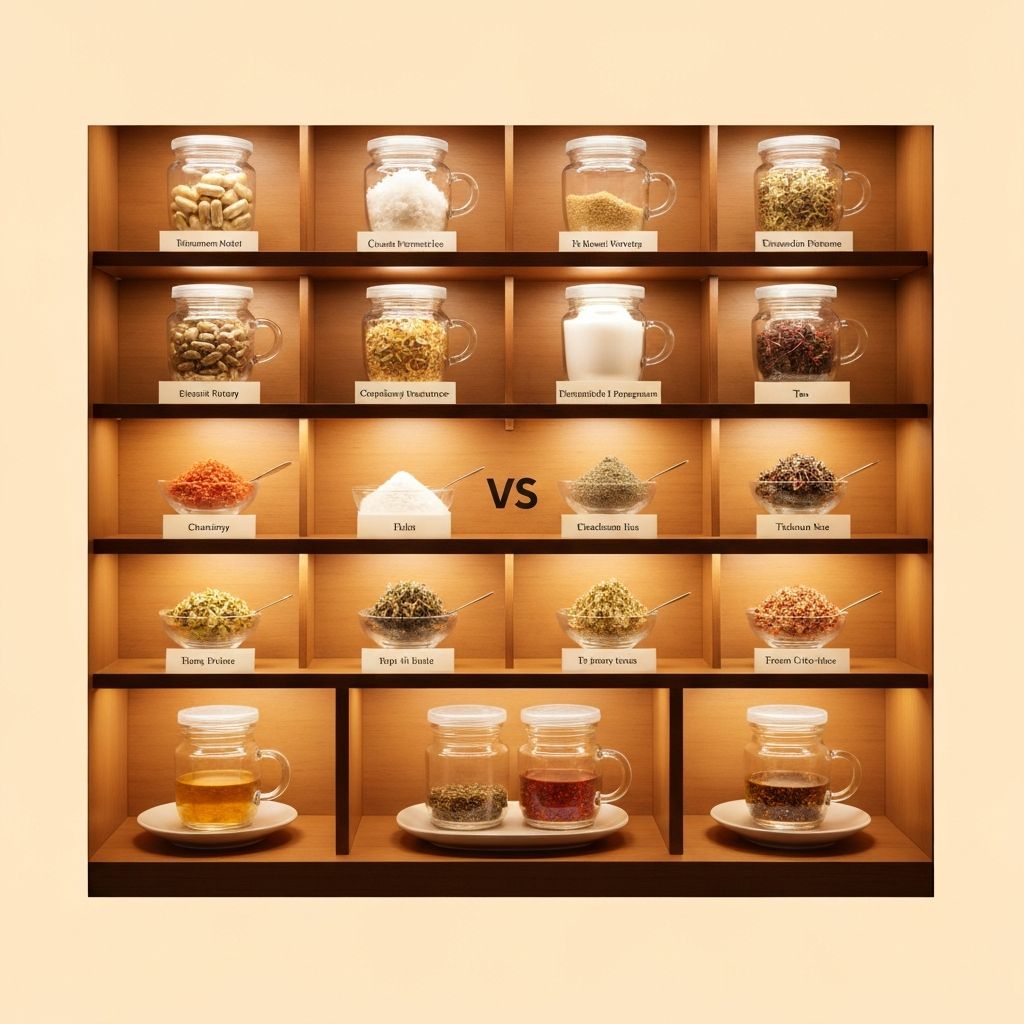
Common Forms
- Whole plant material
- Teas & infusions
- Tinctures
- Dried powders
- Capsules
- Standardized extracts